Key Points
- The knowledge of every stage in commercial construction management can help you to plan better, prevent delays, and remain in control.
- Efficient construction project management enhances risk management in construction, quality, schedules, and communication.
- Optimal construction workflow optimization in projects will lead to a smoother run, fewer surprises, and overall better project performance.
Construction management can appear to be an industry of drawings, work teams, and continuous coordination, but in truth, it is much more. Deep down, it is all about a dream and making it come true, on time, on budget, and with confidence.
You may be planning a retail facility, a corporate office, a healthcare establishment, or a multi-story development, but in any case, knowing about the key stages of commercial construction management makes the whole process seem a little lighter and much more foreseeable.
The success or failure of the majority of the projects is determined by the effectiveness of each of the phases in the process of planning, execution, and monitoring. One step is missed, the whole chain is missed. That is the reason why project management is important in every relevant decision and helps your project focus on the right path.
Let’s go through each step in detail to make it easy for you!
1. Planning in the Pre-Construction Phase
Every strong project starts long before anyone steps onto the site. The pre-construction phase is the base for everything ahead.
This is where we describe the project scope, outline budgets, and evaluate feasibility. This stage includes reviewing architectural concepts, studying site conditions, and identifying risks before they turn into expensive problems. Think of this stage like setting up your GPS. If we don’t map the route, the journey gets messy fast.
Cost estimating and initial scheduling are also handled during this phase. The idea here is simple: tell everybody the requirements, the total cost, and what to look forward to. Get this stage correct and the whole project gains, both in terms of cost control and effortless communication.
2. Design Development and Value Engineering
When the groundwork is established, we shift to the design development level. All the architects, engineers, contractors, and owners are at the same table and transform ideas into detailed plans.
This is where value engineering comes in. It is not only about quality, but it is also about getting the necessary results without going over the budget. This might include the use of better materials, changing the layout, or even better systems to reduce the number of maintenance costs in the long run.
Good collaboration is the secret here. By making everyone work on the design, you are not caught by any expensive surprises in the construction process.
3. Procurement: Securing the Right Materials and Teams
It’s more than picking the right materials for your project. This step entails mini-steps of recruiting subcontractors, skilled workforce, the appropriate tools and machines, and construction components at the appropriate cost and at the appropriate time.
One procurement delay can throw the entire schedule off track. Late steel deliveries or missing HVAC units? Everything stalls. That’s why strong supplier relationships matter. Good partners ensure that your project is on track.
The procurement also involves contract negotiations, clarification of duties, and quality expectations. It is one of those backstage processes that keep the whole project together.
4. Construction Phase
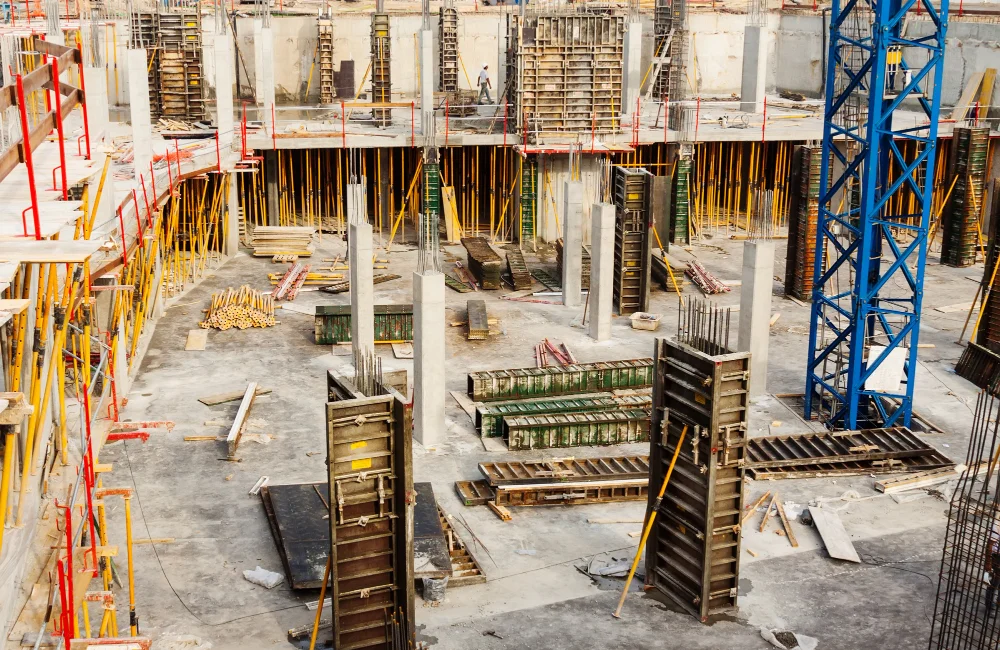
It is the stage that most people imagine: on-site teams, machines operating, and progress being made on a daily basis. But here too, structure and coordination are more than anything.
This phase is monitored through structured project management, which includes scheduling crews, monitoring progress, ensuring safety, and aligning work with approved plans. Communication is constant. Meetings, reports, and inspections all assist in keeping the project on track.
No one knows when a problem will emerge. It might be unpleasant weather, a lack of raw materials, a shift in authorization, etc. However, immediate decision-making and proficiency can make the whole situation run smoothly. Also understand the importance of safety standards in commercial construction.
5. Quality Control and Compliance Checks
Speed is not important even in a construction activity, but quality is. This can be done with quality control to ensure that every element of the building is up to code, safety laws, and standards in the project.
The regular checks ensure that the structure is good, safe, and that it has been constructed properly as anticipated. This also involves coordination with local fire inspectors, mechanical inspectors, and environmental inspectors.
Adequate quality control protects the performance of the building in the long term and removes the threats of costly repairs later.
6. Project Monitoring and Cost Management Throughout the Build
As construction continues, we constantly track budgets, schedules, and resources. No project ever goes just as planned, and that’s why continuous monitoring matters.
Maybe the weather slows progress. Maybe material prices change. Possibly the owner requests adjustments. With active monitoring, we catch these changes early and adjust before costs escalate.
This stage maintains the project as a financially sound undertaking, as well as making it transparent throughout. This is also where risk management in construction plays a crucial role, allowing teams to foresee problems before they go out of control.
7. Closeout and Final Handover
When the project is on the approach of completion, then the closeout stage starts. Here, we finish the work left incomplete, rectify the defects, and prepare the building to be used.
A complete closeout includes:
- Final inspections
- Punch-list corrections
- As-built drawings
- System operation manuals
This level makes sure that all the commitments in the contract are completed, and you are presented with an operating, safe high quality building.
8. Post-Construction Support
The project does not necessarily stop with the handing over of the keys. There is always support available for early operations.
This can take the form of training your facility team, answering warranty inquiries, or performing the initial building inspection. It builds confidence and makes sure that everything works out as desired.
Why These Phases Matter
Commercial construction is full of numerous moving pieces. The division of the process into the following distinct stages makes even the most complicated projects feel easy.
Planned and considered step by step, i.e., early planning, careful implementation, and the support afterwards will give you a building that is well-performing, does not go over budget, and will fulfill your expectations.
To the owners, investors, as well as the facilities managers, knowledge of these phases translates to more confidence, increased communication, and fewer surprises.
Final Thoughts
All commercial projects are accompanied by difficulties, and commercial construction management lowers the risks. With sufficient planning, communication will remain transparent, and every stage will be approached cautiously, and your overall project will become a smooth and more predictable process. These phases are your guide, whether it is the first building you are about to make or you are about to embark on a big expansion.
If you want your project to also be handled with this level of care and planning, you can count on Tarzia Group to handle it smoothly. We have been providing high-end construction services since 1988 in Connecticut and surrounding cities like Greenwich, Westport and Darien CT. It shows our commitment to delivering excellence.
Also, our team makes sure that every stage is clear and coordinated for you. If you want to learn more about our construction or remodeling services, contact us now!
Frequently Asked Questions
How does construction project management help reduce risks?
It is beneficial because it helps identify problems at an early stage, enhances communication, and has a proper plan. This enhances risk management within construction and keeps your construction safer and more predictable.
Why is construction workflow optimization important?
It maintains a smooth flow of the project. Once tasks are planned in order, the speed of work increases, the time lost is minimized, and costs are contained.
What happens after the building is completed?
Next steps may include warranty help, system training, and early performance checks to make sure everything works exactly as expected.